


Whitening Cream for Oily Skin and Dry Skin: How to Choose (2026)
Quick answer: The right whitening cream for oily skin is a light formula labelled oil-free or non-comedogenic. For dry skin, prioritize a suitable moisturizer and check whether additional brightening actives irritate your skin. Ingredient names alone cannot tell you which finished cream will suit you. Below, we compare published information for selected GlutaPro products; optional serums are additions, not requirements.
GlutaPro sells the products discussed in this guide and is not the manufacturer. Prices are our listed selling prices, checked on 13 October 2026. This guide has not established comparative skin-type suitability for these products. In this guide, “whitening” means working toward brighter-looking, more even-toned skin; it does not promise a permanent change in your natural skin colour.
Searching for the best whitening cream for oily skin usually ends in confusion. One review calls a cream too heavy, another says the same cream did nothing for dry skin. Skin type is one useful selection factor, but it is not the only one. Safety, the complete formulation, and how your individual skin responds matter just as much.
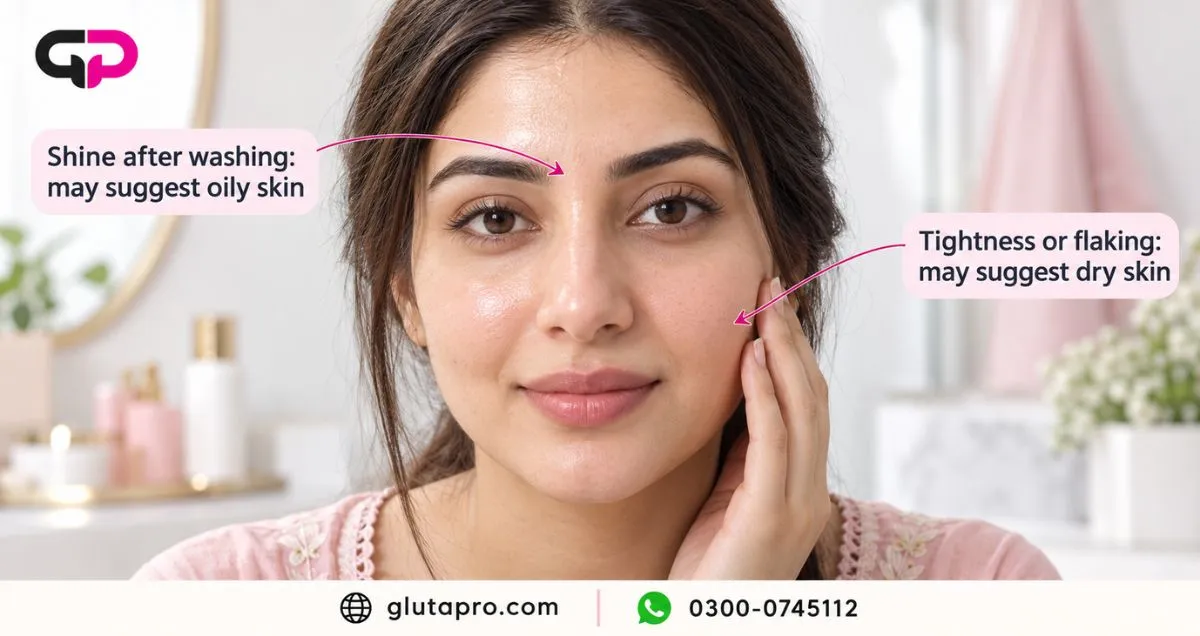
Oily and dry skin do have different preferences. Shine a few hours after washing may suggest oily skin, while tightness or flaking after washing may suggest dry skin. Note that these are clues, not diagnoses: the products you already use, the weather, and even indoor heating or air conditioning can influence both signs. And whichever type you lean toward, both need appropriate moisturizing and daily sun protection.
What Your Skin Type Tells You, and What It Does Not
Brightening ingredients such as niacinamide, alpha arbutin, kojic acid and glutathione are what fade dark spots and even out tone. But judging a finished cream by two or three highlighted ingredients is a mistake. The complete formula, the concentration of each active, the directions for use, and your individual response all affect whether a product suits you and whether you tolerate it.
Terms like oil-free and non-comedogenic on a label describe the finished product, which is more informative than an ingredient list alone. When comparing options, read the complete label and the manufacturer’s directions rather than deciding from highlighted actives. The American Academy of Dermatology (AAD) advises choosing moisturizers and cleansers labelled oil-free or non-comedogenic when managing oily skin (AAD: how to control oily skin), and gives separate guidance on picking a suitable moisturizer for dry skin (AAD: how to pick the right moisturizer).
If You Have Oily or Acne-Prone Skin
Gluta White 3-in-1 Night Cream lists alpha arbutin, niacinamide and glutathione as its featured trio, described as a Triple Action Complex (50g, listed at Rs 1,799). These names do not establish that the finished cream is oil-free, non-comedogenic, or lighter than another cream. If you have oily or acne-prone skin, check the complete label and any relevant manufacturer claims before deciding. You can view the 3-in-1 Night Cream here, that label-first habit is the most reliable way to judge any whitening cream for oily skin.
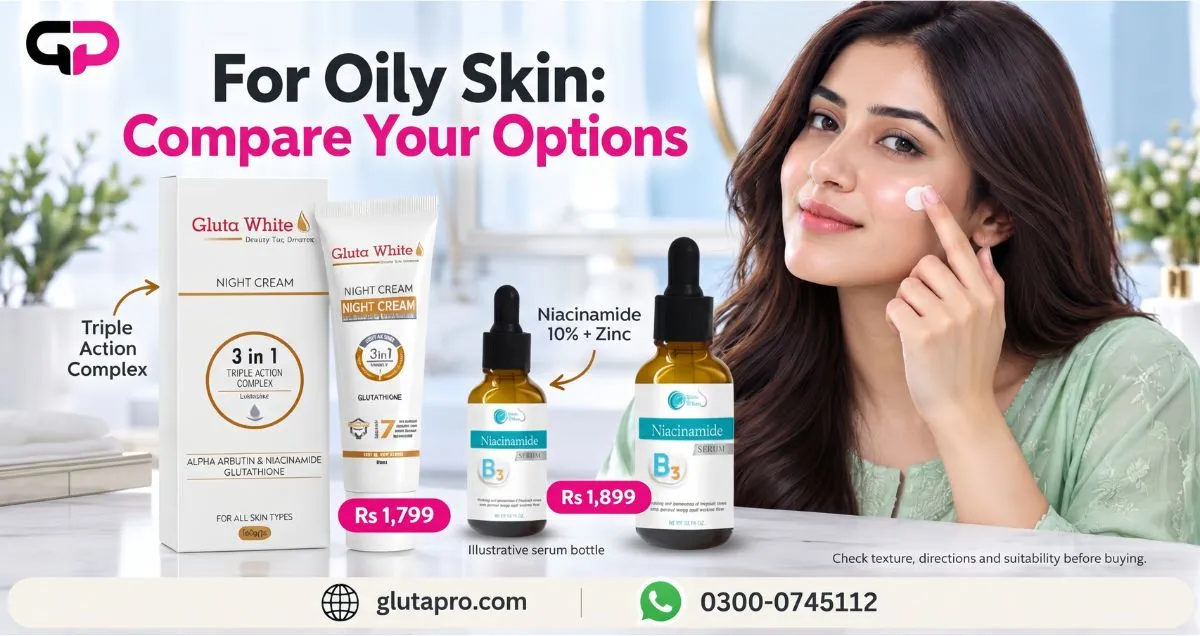
A serum is optional. Gluta White also offers a Niacinamide Serum listed as niacinamide 10% + zinc 1% (Rs 1,899). If you are considering one, compare its complete formula and directions with the products you already use. Introduce products separately so that any reaction is easier to identify. This guide has not tested these cream-serum combinations or shown that using both produces better results. For background on the ingredient itself, see our niacinamide ingredient guide. You can view the Niacinamide Serum here.
One more point for oily skin: it can still need moisturizer. When shortlisting a whitening cream for oily skin, comfort on your skin matters more than how many actives are listed. Choose a formula that feels comfortable rather than skipping hydration entirely, and select one whose labelling suits oily skin.
If You Have Dry Skin
Gluta White Cream Jar (listed at Rs 2,250) and GlutaOne Night Cream (listed at Rs 2,299) can be compared by their published ingredients and directions, but this guide has not established either as the better option for dry skin. The jar’s product-page table lists selected actives including glutathione 0.5%, alpha arbutin 1%, glycolic acid 5% and kojic acid 2%; these are selected actives from the product-page table, not the complete ingredient list. Glycolic acid is an exfoliating ingredient, not evidence that the cream will meet your moisturizing needs. Address dryness and irritation before adding more active products. You can view the Gluta White Cream Jar here and view the GlutaOne Night Cream here.

A hydrating serum is optional, not compulsory. GlutaOne offers a Hyaluronic Acid Serum listed as 2% (Rs 2,299). The same optional-addition logic applies: compare the full formula, introduce it separately, and do not assume the combination outperforms either product alone. You can view the Hyaluronic Acid Serum here.
A note on exfoliating acids: alpha hydroxy acids such as glycolic acid can increase sun sensitivity, so morning sun protection matters even more when your routine includes them (FDA: alpha hydroxy acids).
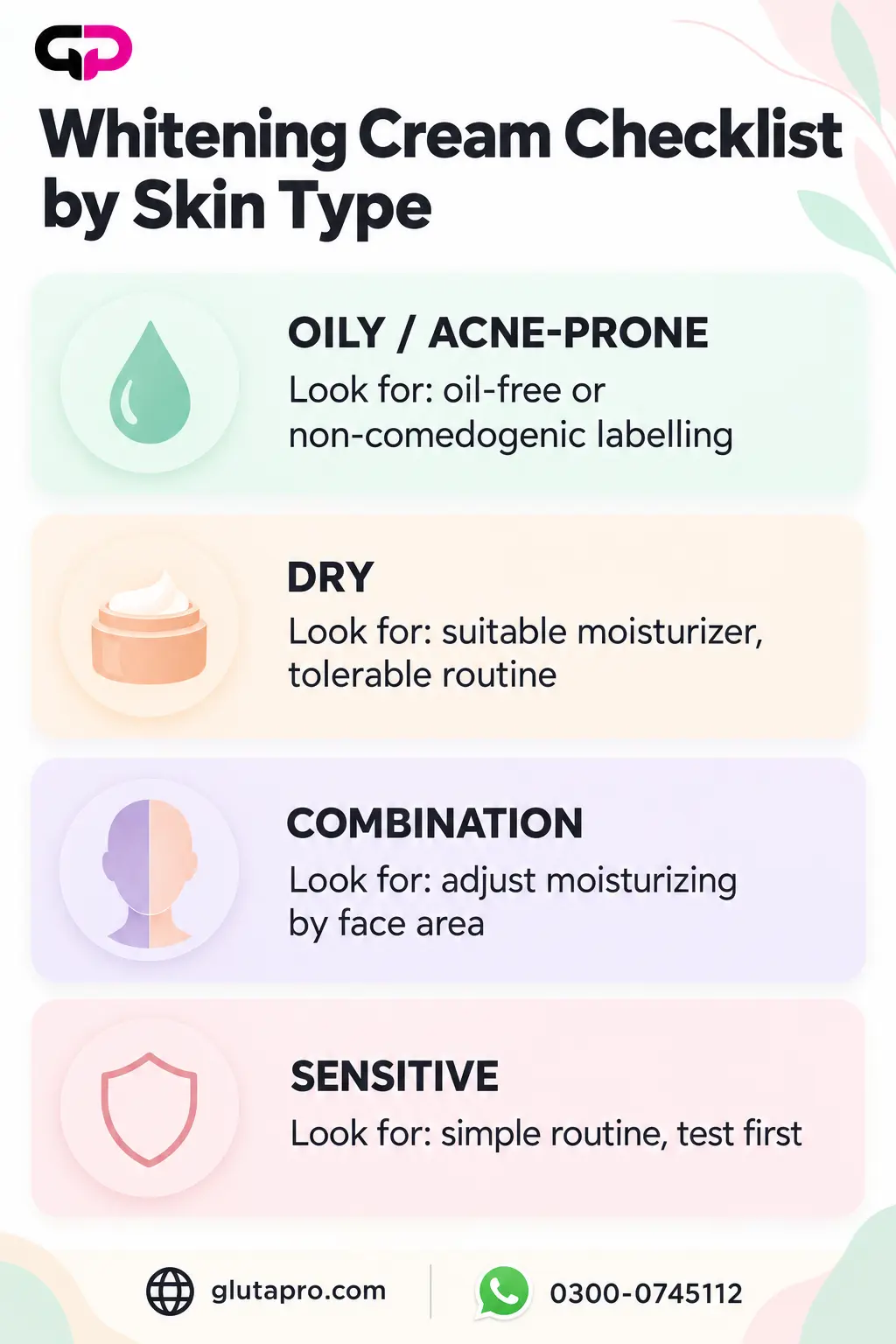
Skin Type Checklist: What to Look For Before Buying
| Skin type | What to look for | Before buying | Optional addition |
|---|---|---|---|
| Oily / acne-prone | Comfortable formula; oil-free or non-comedogenic labelling where available | Check finished-product information, not just the presence of niacinamide | A serum only if needed and tolerated; a suitable moisturizer may still be useful |
| Dry | Suitable moisturizer and a tolerable routine | Do not infer moisturizing performance from jar packaging or selected brightening actives | Hydrating serum if useful; it is not compulsory |
| Combination | Adjust moisturizing to different areas of the face | Persistent tightness may need a routine reassessment, not automatically a second active cream | Additional moisturizer on dry areas, as appropriate |
| Sensitive | Simple routine and attention to your triggers | Skin type does not guarantee tolerance; home testing has limits (see below) | Introduce one new product at a time |
Products Compared: Published Information
| Product | Published information | What remains unconfirmed | Listed price |
|---|---|---|---|
| Gluta White 3 in 1 Night Cream | Triple Action Complex (alpha arbutin + niacinamide + glutathione); 50g | Oil-free / non-comedogenic status of the finished cream; comparative lightness | Rs 1,799 |
| Gluta White Cream Jar | Selected actives per product-page table: glutathione 0.5%, alpha arbutin 1%, glycolic acid 5%, kojic acid 2% | Complete ingredient list; moisturizing performance for dry skin | Rs 2,250 |
| GlutaOne Night Cream | GlutaOne night cream, sold by GlutaPro as an authorized seller of GlutaOne Private Limited | Comparative suitability for dry versus oily skin | Rs 2,299 |
| Gluta White Niacinamide Serum | Listed as niacinamide 10% + zinc 1% | Benefit of this exact serum-cream combination | Rs 1,899 |
| GlutaOne Hyaluronic Acid Serum | Listed as hyaluronic acid 2% | Benefit of this exact serum-cream combination | Rs 2,299 |
A note on authenticity: GlutaPro sells 100% original Gluta White products in Pakistan. Gluta White originals carry a one-time verification code checked at glutawhite.info. GlutaOne has no verification-code system; GlutaPro is an authorized selling partner of GlutaOne Private Limited, selling 100% original GlutaOne products in Pakistan.
5 Mistakes That Hurt Results for Every Skin Type
1. Using more than the directed amount
Follow each product’s own amount and frequency instructions, usually a small amount for the whole face. Using more does not speed up brightening. Excess use may irritate skin or feel uncomfortable, whatever your skin type.
2. Skipping moisturizer because your skin is oily
Oily skin can still need moisturizer. The useful point is simple: choose a formula whose labelling suits oily skin rather than skipping hydration entirely.
3. Skipping sunblock in the morning
Sun exposure can worsen uneven pigmentation. Sun protection is an important part of a routine addressing dark spots. This matters even more with exfoliating acids such as glycolic acid, which can increase sun sensitivity (FDA: alpha hydroxy acids).
4. Adding several active products in the same week
Starting a new whitening cream plus a serum, an exfoliating toner and another treatment all at once makes it impossible to tell which product caused a reaction. Introduce one product at a time. Complete the home-testing period and assess tolerance before introducing another product, following its directions.
5. Switching products before giving them a fair trial
Results and timing vary from person to person, and no fixed timeline applies to everyone. Constantly switching products means none gets a fair trial, and the churn itself can irritate skin. That said, do not continue using a product through irritation: stop, let skin calm down, and seek medical guidance if symptoms persist. Our side effects guide describes what different reactions can look like.
How to Test a New Product at Home
Before full-face use, the AAD describes a general home-testing method: apply the product to a quarter-sized area on the underside of the arm or near the elbow, at normal amount and thickness, twice daily for seven to ten days (AAD: how to test skin care products). Do not override any specific label or clinician instructions with this general method.
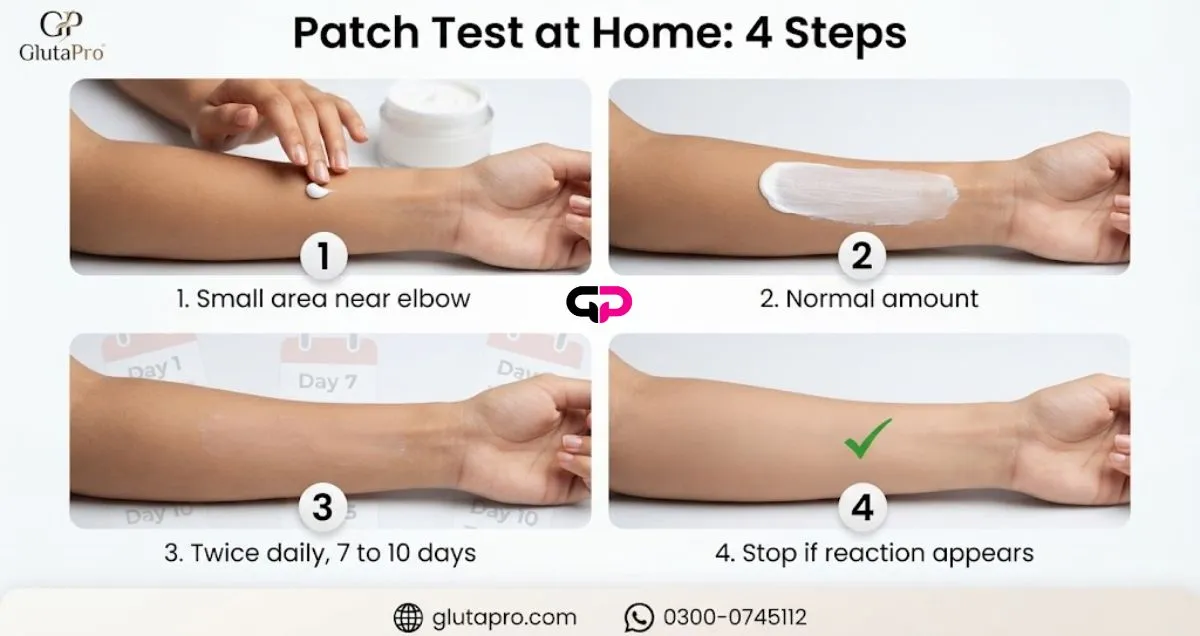
Understand its limits: home testing may reveal a reaction but does not guarantee tolerance during continued facial use, and it is not the same as diagnostic allergy patch testing. If a reaction appears, wash the product off and stop. For severe or persistent symptoms, get medical guidance instead of waiting it out.
Frequently Asked Questions
Can I use a whitening cream for oily skin every day?
How often you can use a product depends on its label directions, the full formulation, and your individual tolerance, not on texture alone. Start as directed, watch for irritation, and adjust. There is no automatic rule that a serum must be paired with the cream.
Which brightens better: a whitening cream or a serum?
Neither format is inherently the stronger brightening treatment. Compare the actual formula, the concentration of actives, and the intended use of each product. A serum and a cream can play different roles in a routine, but the format alone does not establish an efficacy hierarchy.
Can I use a whitening cream in summer when my skin gets oilier?
Yes. In Pakistan’s hot, humid weather, choose a comfortable, lightweight routine and keep to the directed amount. Morning sunblock stays essential in every season, since unprotected sun exposure works against brightening progress.
My T-zone is oily but my cheeks are dry. Which approach should I take?
Adjust moisturizing to different areas rather than automatically buying two active routines. If dry areas stay tight, reassess the routine, perhaps with a suitable moisturizer on those areas, instead of adding a second active whitening cream by default. Introduce any change separately so reactions stay traceable.
Still comparing a whitening cream for oily skin against other options? Read our full best whitening cream in Pakistan guide for the complete product comparison.


