

Gluta White Cream Side Effects: Is It Safe? (Honest Guide)
Transparency note: This guide (Gluta White Cream Side Effects) is published by GlutaPro.com, an authorized seller of Gluta White products in Pakistan , not the manufacturer. It is written from the actual product packaging and is not medical advice. If you have a skin condition, talk to a dermatologist before starting any new cream.
Quick Answer: The ingredient list on the reviewed box names skincare actives glutathione, alpha arbutin, glycolic acid, kojic acid, niacinamide and magnesium ascorbyl phosphate with no hydroquinone, steroids or mercury listed. Possible effects include mild tingling, redness or dryness. Redness may indicate irritation or an allergic reaction; the cause cannot be established from symptoms alone. Stop use and ask a clinician if you get burning, swelling, a spreading rash or blistering. Patch-test first, and use sun protection daily during use and for a week after stopping.
What’s Inside: Ingredients from the Box
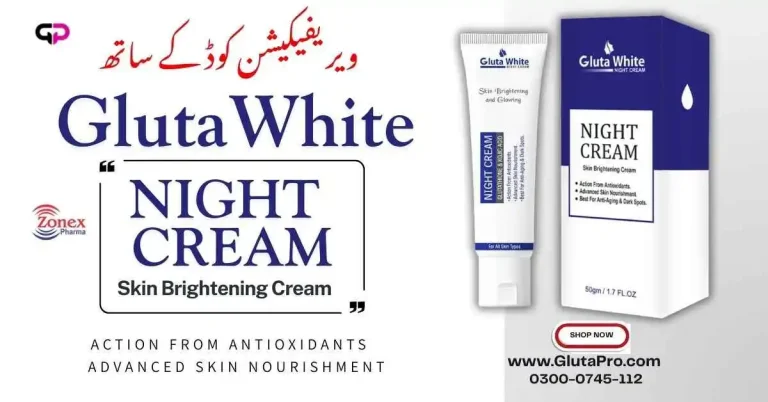
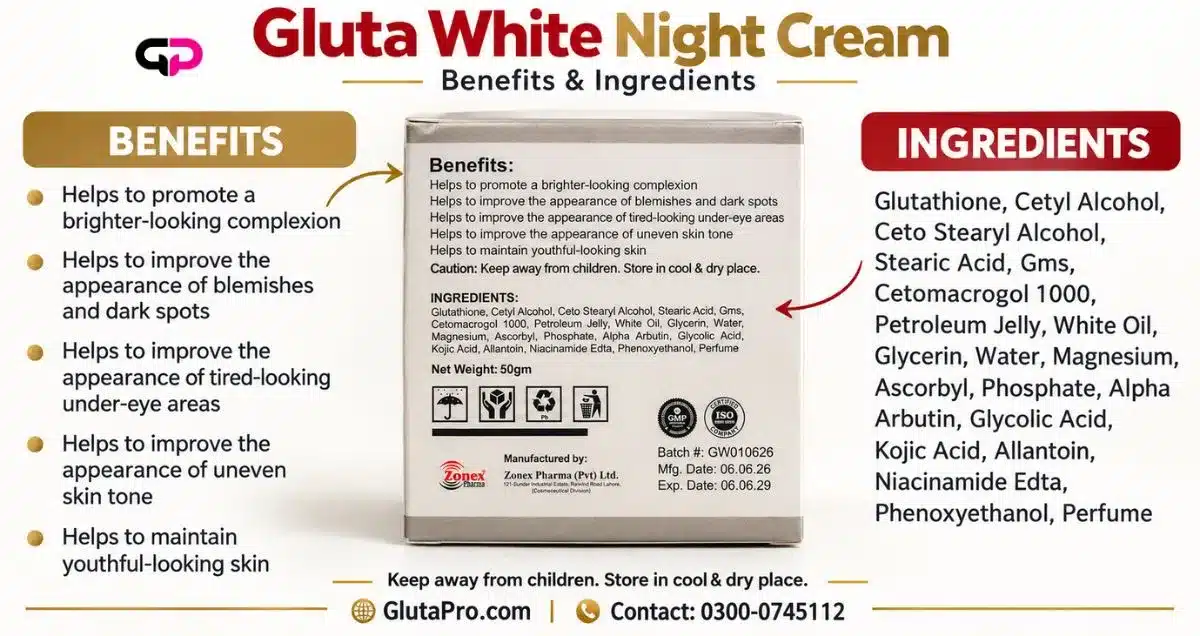
Understanding gluta white cream side effects starts with knowing exactly what’s in the jar. Below is the ingredient list printed on the Gluta White Night Cream box (50gm, manufactured by Zonex Pharma Pvt Ltd; the reviewed box carries GMP and ISO marks):
Glutathione, Cetyl Alcohol, Ceto Stearyl Alcohol, Stearic Acid, Gms, Cetomacrogol 1000, Petroleum Jelly, White Oil, Glycerin, Water, Magnesium Ascorbyl Phosphate, Alpha Arbutin, Glycolic Acid, Kojic Acid, Allantoin, Niacinamide, EDTA, Phenoxyethanol, Perfume.
The key brightening actives and their strengths, as shared by the brand, are: (Note: the box itself lists ingredients without percentages. The strengths below are brand-shared figures, not printed on the packaging reviewed.)
| Active ingredient | Strength | What it does |
| Glutathione | 0.5% | Antioxidant; the signature brightening ingredient of the range |
| Alpha Arbutin | 1% | Helps improve the appearance of dark spots and uneven tone |
| Glycolic Acid | 5% | An AHA exfoliant; smooths texture but can cause tingling and sun sensitivity |
| Kojic Acid | 2% | Helps with the appearance of pigmentation; can irritate very sensitive skin |
Supporting ingredients include niacinamide (supports skin barrier and tone), magnesium ascorbyl phosphate (a stable vitamin C derivative with antioxidant support) and allantoin (soothing it helps calm mild irritation). The base is a standard cosmetic cream base: cetyl alcohol, stearic acid, petroleum jelly, glycerin and similar moisturizers.
Equally important is what’s not listed on the label: hydroquinone, corticosteroids and mercury are not among the printed ingredients. Label absence is not laboratory confirmation but a box that lists any of those, or no ingredients at all, deserves extra scrutiny, including a verification-code check.
The box also lists what the cream is meant to do: help promote a brighter-looking complexion, improve the appearance of blemishes and dark spots, tired-looking under-eye areas and uneven skin tone, and help maintain youthful-looking skin. Notice the careful wording “helps improve the appearance of.” That’s the careful wording this guide follows.
Possible Mild Side Effects (and Why They Happen)
Let’s answer the main question directly: yes, mild gluta white cream side effects are possible. Here’s what may occur, and the ingredient classes associated with each:
1. Tingling or mild stinging right after application. This can be associated with glycolic acid products. A brief tingle that fades within minutes may occur but tingling or flaking are not required for the product to work, and should not be treated as proof of effectiveness. AHA effects also depend on pH and the full formulation, not concentration alone.
2. Redness. Mild redness can occur, especially on sensitive or first-time AHA skin. Redness may indicate irritation or an allergic reaction the cause cannot be established from symptoms alone, and could involve the acids, the fragrance, preservatives, or another ingredient.
3. Dryness or light peeling/flaking. Glycolic acid exfoliates the skin; dryness or flaking can also indicate irritation from the formulation. A simple fragrance-free moisturizer applied after the cream absorbs can help.
4. Slight sensitivity. Skin may feel more reactive products that never stung before might tingle briefly.
One factor makes all of these more likely: using more than the directed amount. The box says a pea-sized amount for a reason exceeding it increases the likelihood of irritation without improving results. If irritation is persistent, worsening, or uncomfortable, pause use and seek professional advice rather than continuing in the hope that skin will adjust.
What’s NOT Normal: Warning Signs to Stop
Stop using the cream and talk to a dermatologist if you notice any of these:
Burning that doesn’t fade within minutes, or gets worse with each use
Swelling, hives, or a rash spreading beyond where you applied the cream
Intense or persistent itching
Blistering, oozing, or raw-feeling skin
New dark patches appearing where there were none (irritation itself can sometimes trigger pigmentation changes)
Don’t try to “push through” these hoping your skin will adjust. Wash the cream off, let the skin calm down, and get professional advice before trying again or switching products.
If Redness Appears: What to Do
The steps below reflect GlutaPro’s customer-care guidance for buyers who report redness seller practice shared for transparency, not a clinically established medical protocol.
1. Stop the cream immediately and wash it off. Don’t apply more hoping it will settle.
2. Use only a gentle, non-exfoliating cleanser while the skin recovers nothing with acids, scrubs or strong actives.
3. Apply a cool compress (a clean cloth dampened with cool water) gently to calm the area.
4. Do not re-use the product until you have clinician advice (see below).
If you developed redness or a suspected allergic reaction, seek clinician advice before restarting. Do not restart on your own simply because the skin looks calm; follow the clinician’s advice on whether to re-use it, and stop again immediately if redness returns. Recurring redness means the formula doesn’t suit your skin: see a dermatologist instead of repeating the cycle.
Sun Sensitivity: Why Daytime Sunblock Is Non-Negotiable
This point deserves its own section. Glycolic acid is an AHA, and AHA-containing products may increase the skin’s sensitivity to sunlight follow sun-protection precautions regardless of when you apply the product.
The practical rules are simple:
This is a night cream. Never use it as a day cream or under makeup in sunlight.
Every morning: wash your face with Gluta White Face Wash, then apply a broad-spectrum sunblock (SPF 30 or higher).
Reapply if you’re outdoors for extended periods.
Skipping sunblock while using an AHA product doesn’t just raise sunburn risk UV exposure actively works against the brightening results you’re trying to get. The night cream and the daytime sunblock are a pair, not options.
If you know you won’t wear sunblock consistently, an AHA-containing night cream isn’t the right product routine for you. Note that sun sensitivity from AHAs isn’t limited to daytime application: keep up sun protection sunscreen, protective clothing and limited midday exposure during use and for about a week after you stop.
Who Should Ask a Doctor First
Tolerance varies by skin type and the complete formulation; following directions does not eliminate reaction risk. Talk to a dermatologist before starting if any of these apply to you:
You’re pregnant or breastfeeding. Ask your clinician before use.
You have eczema, rosacea, or very sensitive/reactive skin. An AHA-containing formula may be too active for compromised barriers.
Your skin is currently broken, wounded, or actively irritated. Don’t apply any brightening cream on broken skin let it heal first.
You use prescription skin treatments (retinoids, strong exfoliating acids, medicated acne products). Combining actives without guidance can increase the risk of over-irritation.
You have a known allergy to any ingredient on the list above.
This isn’t about scaring you off it’s about matching the product to the right skin at the right time.
Patch Test First: 3 Simple Steps
A patch test can catch immediate reactions though a one-day negative result doesn’t rule out delayed reactions:
1. Apply a small amount of the cream behind your ear or on your inner forearm.
2. Watch for redness, itching, swelling or burning over several days. The AAD describes home-testing a new skincare product over 7–10 days; a single clear day is not a safety guarantee.
3. If no reaction appears during the test period, begin cautious use on the face with a pea-sized amount at night and stop at the first sign of irritation.
If the patch test area reacts, don’t negotiate with it the product isn’t for your skin right now. A single clear day is not a safety guarantee; delayed reactions are possible, and sensitive skin may warrant a longer test or a clinician’s input first.
How to Use It Correctly (Straight from the Box)
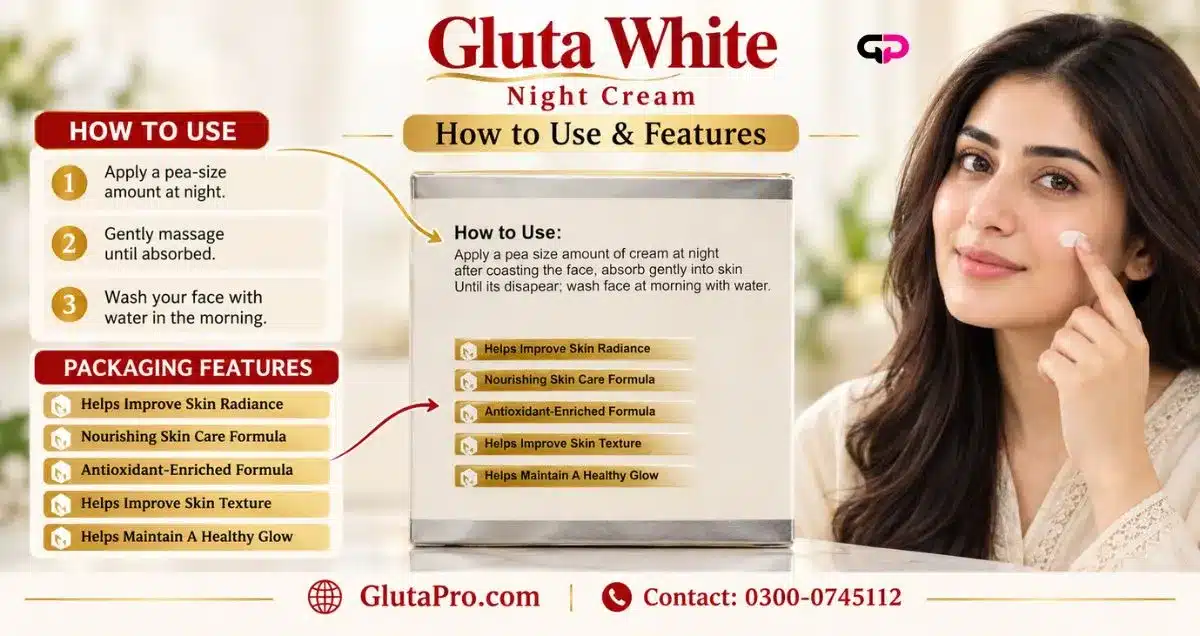
The box directions read: “Apply a pea size amount of cream at night after cleansing the face, absorb gently into skin until it disappears; wash face in the morning with water.”
The correct routine:
Night only, on a clean face pea-sized amount, thin layer, gently massaged until absorbed.
Morning: wash off with water, then sunblock. Every day, no exceptions.
Don’t layer it with scrubs, peeling products or other strong actives unless a dermatologist advises it.
When to stop: any warning sign from the section above, or irritation that persists, worsens, or feels uncomfortable. Persistent irritation means the formula doesn’t suit your skin switching products is smarter than suffering through it.
Irritation risk rises with mistakes such as too much product, daytime use, or skipping sunblock. The box directions exist to prevent exactly that.

Counterfeit Creams and Side Effects
One factor worth separating: counterfeit creams exist in this market, and unregulated copies may contain undisclosed steroids, mercury or high-dose hydroquinone ingredients associated with severe reactions such as thinning skin, rebound pigmentation and rashes.
That said, an adverse reaction can occur with either a genuine or a counterfeit product. If you react, stop use and address the symptoms first; check authenticity separately. The original’s box lists its ingredients openly, names its manufacturer (Zonex Pharma), and carries a one-time verification code on top of the box here’s how to check if your Gluta White cream is original. If the code fails verification or the packaging looks off, don’t put that product on your skin at all.
On the seller side, GlutaPro states that it sells Gluta White products officially in Pakistan, that its products are 100% original, and that every order includes the one-time verification code. It offers Cash on Delivery; whether you can inspect the parcel before paying depends on the courier’s delivery policy.
Frequently Asked Questions
For More Questions and answers please Visit Gluta White FAQ’s Page.
1. Is Gluta White cream medicated?
“Medicated” appears in the brand’s marketing for the range. Without the product’s registration documentation, its regulatory classification can’t be verified here the packaging markets it as a night cream with skincare actives. If you need treatment for a skin condition, see a dermatologist.
2. Does Gluta White cream contain hydroquinone?
Hydroquinone is not listed in the ingredients on the packaging reviewed which is not the same as laboratory-confirmed absence. The listed brightening actives are glutathione, alpha arbutin, glycolic acid, kojic acid, magnesium ascorbyl phosphate and niacinamide. (Note: similarly-named products in other countries may be different formulas this answer covers the Zonex Pharma cream sold in Pakistan. Always read your own box.)
3. Is Gluta White cream safe for daily use?
The box directs nightly use a pea-sized amount every night, washed off in the morning, with daytime sun protection. “Daily” means once nightly; don’t use it twice a day or in thick layers hoping for faster results that increases irritation without improving outcomes.
4. Can men use Gluta White cream?
Yes. The formula isn’t gender-specific, and the directions, precautions and patch-test advice are the same for everyone.
5. What are the side effects of Gluta White Night Cream?
Possible mild effects include tingling, redness, dryness or light peeling. Redness may signal irritation or allergy. Stop use and consult a clinician for burning, swelling, spreading rash or blistering. Patch-test first, and keep up sun protection during use and for about a week after stopping.
Final Verdict
The full picture on gluta white cream side effects: the packaging reviewed lists its ingredients openly no hydroquinone, corticosteroids or mercury among them and the actives that can tingle or sensitize (glycolic acid, kojic acid) are named. The reviewed box carries GMP and ISO marks and names Zonex Pharma as the manufacturer; the brand additionally describes the formula as dermatologist-recommended.
In summary: mild effects are possible; persistent or serious reactions are a stop-and-see-a-clinician signal, not something to push through; adverse reactions can occur with genuine products too, so authenticity checks don’t replace symptom care; and the routine that keeps risk low is simple. Patch test, a pea-sized amount at night, sun protection during use and for a week after, and buy from a verifiable seller.